What Mulch Does Between the Plants
Learn how organic mulch protects exposed soil, which materials suit different beds, and how to place it without smothering plants or hiding problems.
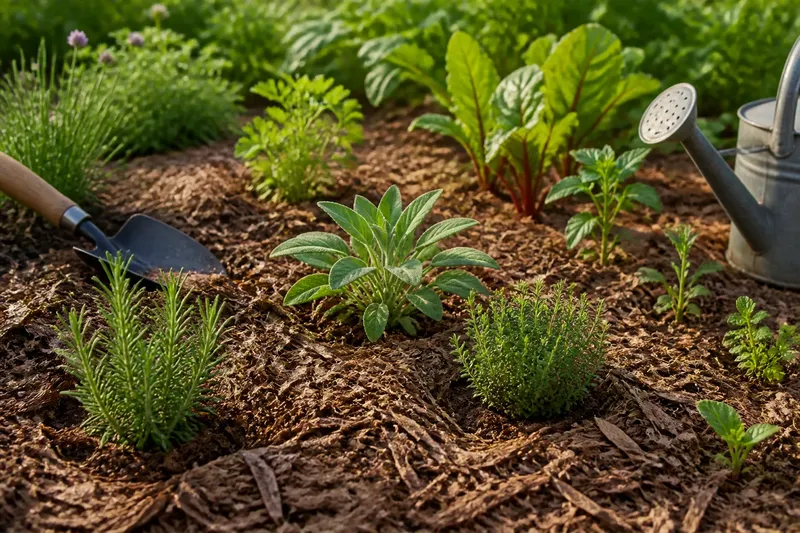
Organic mulch changes the conditions at the soil surface, where rain lands, weeds begin and moisture escapes. A well-chosen layer can make a bed easier to manage, but it cannot repair poor drainage, feed every plant adequately or solve a watering problem by itself.
Think of mulch as a loose lid on a pan, not a new pan. It moderates what happens at the surface while leaving the soil beneath to do its own work. These are the main effects to consider when choosing and placing it.
1. Mulch cushions the impact of rain
Bare soil takes the full force of raindrops. On fine or recently disturbed ground, that impact can break surface crumbs apart and leave a crust that sheds water or makes it harder for seedlings to emerge. A layer of coarse organic material intercepts some of that force before it reaches the soil.
This is particularly useful on beds that are exposed between established plants, or where rain leaves a splash of soil on lower leaves. Straw, shredded leaves and small wood chips all soften the surface, though they behave differently and suit different planting arrangements.
Use a material that stays in place in the conditions your bed faces. Loose straw may shift in strong wind; heavier chips are less inclined to travel, but can be awkward around fine seedlings. If runoff or erosion persists, look beyond mulch too: the bed’s slope, compaction and drainage may need attention.
2. Mulch slows moisture loss from the surface
Sun and moving air dry the uppermost soil first. A surface layer shades it and reduces direct exposure, so the top is less likely to dry quickly between waterings. The effect is most relevant where soil would otherwise remain bare and exposed.
Mulch does not put water into the ground. Rain may pass through some materials readily, while a dense or matted layer can slow it. Water newly planted areas deliberately, and check beneath the mulch rather than judging moisture by its appearance. A dry-looking surface may cover damp soil; a damp-looking layer can conceal dry ground.
For a newly planted bed, water the soil before laying the mulch. That puts moisture where roots can reach it instead of asking a dry layer to do the watering. Keep watering according to the plants and the soil, not according to a fixed schedule inferred from the mulch.
3. Mulch blocks light from many weed seeds
Many weeds need light at the surface to establish. A reasonably even cover makes germination harder for those seeds, and young weeds are often easier to pull from loose material than from a baked crust. It is a form of suppression, not a weed-proof barrier.
Established perennial weeds can push through, and seeds may arrive on top of the mulch. Remove persistent weeds before covering the bed; otherwise, their leaves may be hidden while their roots continue to work. Keep the layer open enough around seedlings that you can see their stems and distinguish them from unwanted growth.
Imagine a small herb bed with bare patches between young plants and a few annual weeds already removed. A gardener spreads shredded leaves over the open soil, leaving a clear ring around each stem; the likely observable result is less bare ground for new weeds to occupy, while the herbs remain visible for routine checks.
4. Organic materials differ in texture and pace
Choose material for the bed’s immediate needs and for how it will behave there. Straw is light and open, useful around larger vegetable plants but prone to shifting. Shredded leaves can cover irregular spaces well, though a thick wet layer may mat. Wood chips make a durable surface for paths and established borders, but their coarse texture is less convenient around tiny seedlings.
Compost can serve as a surface mulch, but it is also a nutrient-bearing soil amendment. Apply it where that role fits the plants; do not assume that every bed needs more nutrients. Leaf mould is generally a softer, more settled material that can cover soil without the bulk of coarse chips.
Use clean material from a source you trust, and avoid spreading diseased plant debris or seed-bearing weeds. Material labels, supplier guidance and local rules may affect what is suitable, especially for composts and imported products.
5. Mulch changes as it breaks down
Leaves, straw and compost gradually decompose, becoming part of the soil’s organic matter. That change is useful, but it means a mulch layer is not permanent. Some materials settle, shift or disappear faster than others, and the exposed patches that result may need attention.
Coarse wood material decomposes more slowly at the surface. Its presence there does not mean it should be mixed deeply into the soil: decomposition within soil can temporarily affect the availability of nitrogen near the material. For a surface cover, leave coarse chips on top and use finished compost or another suitable amendment where soil improvement is needed.
Inspect the bed now and then. If the material has thinned enough to expose soil, add a modest top-up; if it is still covering the surface, more is not automatically better. A thick, compacted layer can impede water movement and leave stems persistently damp.
6. Keep mulch clear of stems and crowns
Leave an open space around plant stems, woody trunks and the crowns of perennials. Piling material against them holds moisture against tissue that needs air and can make early signs of trouble harder to spot. The exact clearance depends on the plant and the material, so aim for visible, uncovered plant bases rather than a uniform mound.
Likewise, do not bury low seedlings or cover the crowns of plants that need to remain exposed. In a bed of mixed plants, a thinner, carefully placed cover is often more sensible than one deep layer laid everywhere. Access for weeding, inspection and watering is part of a usable mulch job.
7. Mulch cannot correct every soil problem
A surface cover may soften rainfall and shade the ground, but it will not fix compacted subsoil, standing water or a bed that dries because roots cannot reach moisture. Nor does it replace suitable soil preparation, appropriate planting depth or attention to plant needs. Treat it as one part of care, not a quiet substitute for diagnosing the cause.
Be especially cautious about covering soil that is already waterlogged or persistently cold and wet. A thick cover can slow surface drying, which may be unhelpful in those conditions. If drainage is the central problem, investigate the site and soil before adding material; a mulch layer is not a drainage system in disguise.
Which mulch suits this bed?
Can I use grass clippings as mulch?
Yes, if the clippings are free of troublesome weed seeds and have not been treated with a product whose instructions rule out that use. Apply them loosely and in thin layers, since a thick mass can mat and heat as it decomposes.
Should I mix wood chips into the soil?
For ordinary surface mulching, keep coarse chips on top rather than digging them into the bed. If you need to improve soil structure or nutrients, choose a suitable finished amendment instead of using fresh woody material as a buried soil improver.
Do I need to remove old mulch first?
Not if it is clean, loose and still doing its job. Pull aside compacted or contaminated material, and avoid piling fresh mulch over plant crowns or over a layer that already blocks water and air.
When should I leave soil uncovered?
Leave space where seedlings need light to emerge, where plant crowns must remain exposed, or where damp conditions make a cover unsuitable. A bare patch chosen for a reason is preferable to a blanket layer that hides the very problem you need to see.
For most garden beds, the useful question is not how much mulch to spread, but which surface condition you want to change. Pick a material that fits the plants and the job, keep it off vulnerable stems, and look beneath it when judging the soil. That small habit keeps mulch useful rather than merely decorative.