A Pot Garden Reset for the End of the Growing Season
A pot garden reset helps you sort tired plants, clean and store sound containers, and keep useful compost and labels ready for the next growing season.
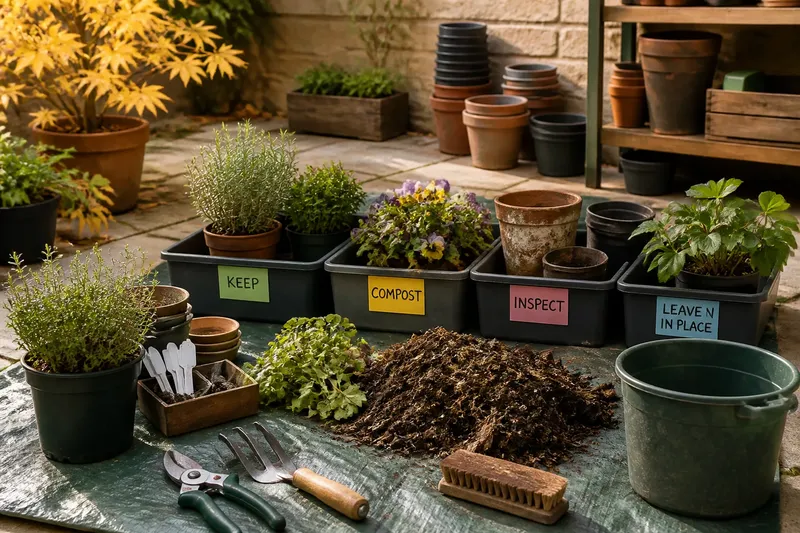
A pot garden reset is easier when you sort containers by what they need, rather than emptying every pot at once. At the end of the growing season, a little triage can save useful plants, compost and containers from being discarded with the spent annuals.
Set aside a dry place to work, such as a patio corner or a sheet of old tarpaulin. Keep a hand fork, secateurs, a stiff brush, a bucket and a few labelled trays nearby. The reset can unfold over several days, which is kinder to your back and less likely to turn a useful job into a heap of damp compost.
Begin the pot garden reset with a quick sort
On the first day, group containers by condition rather than plant type. Look for four broad cases: plants worth keeping, healthy plants that have finished, containers that need emptying, and pots that should stay planted through winter.
- Keep: healthy perennials, herbs and shrubs that suit your space and can tolerate the coming conditions.
- Compost: spent annuals and plant material that is healthy and appropriate for your home compost system.
- Inspect: pots with cracked rims, blocked drainage holes or signs of persistent waterlogging.
- Leave in place: plants that are still growing well or whose roots may be disturbed by unnecessary handling.
Check foliage and stems before moving a plant into a group. Remove clearly dead leaves, but do not strip a healthy plant simply to make the work look finished. If you see unusual spotting, mould or a cluster of pests, keep that material separate while you decide how to dispose of it responsibly.
Decide which plants deserve a place next season
On the second day, assess each plant against the conditions you can actually provide. A cherished rosemary that has outgrown a tiny pot may be worth repotting; a weak annual with no particular value to you can usually be cleared without ceremony.
For plants to keep, check whether they need a sheltered position, a larger container or a quieter winter location. Move tender plants only if you have a suitable bright, cool place for them. Avoid forcing a plant into a warm, dim room simply because it is convenient; poor light can leave it leggy and stressed.
Imagine you have a healthy thyme plant in a pot whose drainage hole is partly blocked, while the foliage is still useful. You could clear the hole, remove soggy debris from the surface and place the pot where rain will not keep it saturated; the expected observable result is that water can escape more freely and the plant remains available for picking, though its condition will still depend on the weather and care.
Empty pots without wasting sound materials
On the third day, empty only the containers that need it. Tip the contents onto the tarpaulin, loosen the root ball with a hand fork and separate large roots, labels and non-compostable debris. Do not pulverise the whole mass: coarse roots and compacted clods are easier to sort when they remain visible.
Old potting mix may be useful as an ingredient in future container mixes or as a soil improver in suitable garden beds, but it is not automatically ready to use again on its own. Remove roots and debris, and set aside material from plants that were diseased or heavily pest-affected rather than spreading it around. If a container held a plant with a recurring problem, treat its old mix cautiously and follow local composting guidance.
Keep clean, sound materials together: plant labels, bamboo canes, saucers and reusable ties. A small box for labels and a bundle of canes stored under cover are less glamorous than buying replacements, but they are also less cluttered. Reuse only items that are intact and fit for their purpose.
Clean containers and check drainage
On the fourth day, brush soil from empty pots and wash away residue with water and a stiff brush. Let containers dry before stacking them, especially if they will be stored somewhere enclosed. Clay pots can be vulnerable to frost when damp, so move them to a sheltered spot if local winter conditions make that a concern.
Inspect drainage holes and saucers as you clean. Remove loose debris, but do not enlarge or alter a pot in a way that could crack it. Plastic pots with splits, brittle rims or unstable bases are poor candidates for another season; sound ones can be stacked by size, with a scrap of cardboard between nested pots if they stick together.
Think of the storage area as a kitchen drawer: it works best when similar things have a place and awkward items are not forced into it. Keep pots, trays and labels grouped by type, and leave fragile terracotta where it will not be knocked over by a stack of plastic containers.
Prepare a simple record for the next growing period
On the fifth day, write a short note about what each retained plant needs and where it belongs. Record practical details such as “move under cover”, “repot before new growth” or “check drainage”, rather than a full account of the season. Attach a clean label where a plant might otherwise be hard to identify.
Make a brief list of materials you already have: usable pots, compost ingredients, supports and spare labels. This turns next season’s preparation into a choice among available resources rather than an automatic shopping trip. If you are unsure whether a product or material can be reused safely, follow its label or the manufacturer’s instructions; local rules may also apply to disposal.
What should you do with common pot-garden leftovers?
Can old potting mix be reused?
It can sometimes be reused as part of a fresh mix or in a suitable garden bed after roots and debris are removed. Avoid reusing material from plants affected by disease or persistent pests.
Should empty pots be stored upside down?
Store them in a stable position that sheds rain and does not trap water, while keeping fragile pots protected from knocks and frost. Nest containers only when they can be separated without force.
Which plants should stay in their pots over winter?
Keep plants that are healthy and suited to your available winter conditions, including perennials or herbs that do not need immediate division. Leave a plant undisturbed if moving it offers no clear benefit.
What should happen to a pot with a crack?
A minor crack may make a pot unsuitable for a plant that needs reliable moisture control or stable support. Retire containers with sharp edges or a weak base, and use only sound pots for future planting.
Finish by leaving the work area ready
On the final day, return tools to storage, sweep up loose material and put the retained plants in their chosen positions. Leave a clear route to the pots you may need to check during winter, rather than burying them behind stacks of empty containers.
A useful pot garden reset does not mean making every container pristine or saving every scrap. It means finishing with fewer questionable materials, a clear place for what remains, and a short note that makes the next growing season easier to begin.