Seed Tray or Direct Sowing: Choosing a Starting Point
Seed tray or direct sowing? Match the method to your plant, available space and local season so seedlings have a suitable start without extra work.
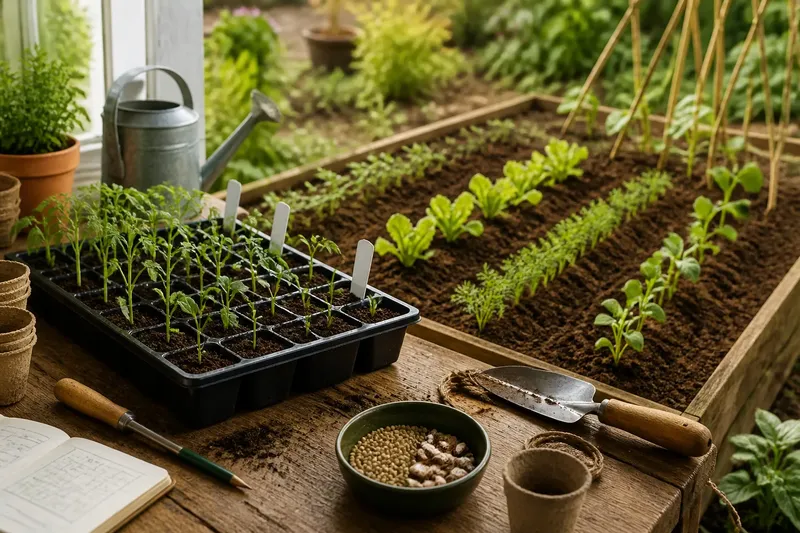
For seed tray or direct sowing, the plant’s tolerance for disturbance matters as much as the space on your windowsill. Beans and carrots usually do better sown where they will grow; tomatoes and many brassicas can benefit from a protected start in a tray. The useful choice is the one that gives a particular crop suitable conditions without creating a second job you do not have room to do.
Think of a seed tray as a temporary nursery bed. It offers control over the early conditions, but seedlings must eventually leave it. Direct sowing skips that move and puts the seed straight into its final place, where the weather and soil take over. The decision depends on the crop, the calendar, your growing space and how closely you can tend seedlings.
Start with the plant’s response to being moved
Some plants transplant readily: their roots tolerate being moved from a small container into a bed or larger pot, provided the seedling is handled carefully and given time to settle. Tomatoes, lettuce and many cabbage-family crops are commonly started this way. A tray can also make small seedlings easier to protect from slugs, cold nights or birds before planting out.
Other plants resent root disturbance or grow quickly enough that an indoor start buys little. Root vegetables such as carrots and parsnips are usually sown in their final position because their developing roots can fork or become misshapen if displaced. Beans, peas and many other fast-growing crops are often straightforward to sow outside once the ground is suitable. Cucurbits, including courgettes and pumpkins, can be raised in pots, but their roots dislike being held in a cramped container for long.
Check the seed packet for whether the crop is commonly sown indoors or outdoors, and note any advice about transplanting. If the instructions say to sow in place, take that seriously unless you have a particular reason and a way to move the seedling with its root ball intact. A plant’s eventual size is not the deciding point; how it responds to a change of home is.
Choose a tray when outdoor conditions are the limiting factor
Indoor sowing is useful when seeds need warmth to germinate but the outdoor soil is still cold, or when young plants would be exposed to rough weather. Starting in a tray can also make a short growing season more workable: the plant begins growing under cover while the garden is not yet ready to receive it. The advantage is a head start, not a reason to sow far earlier than the plant can be moved outside.
A tray suits a gardener who has a bright, reasonably warm place, clean containers with drainage holes and enough time to check moisture. A sunny windowsill can work for some seedlings, though indoor warmth without enough light may produce thin, stretched growth. A greenhouse or cold frame can offer more space, but conditions still need watching; neither is an automatic substitute for suitable light and ventilation.
Use seed-starting compost or another fine, free-draining medium intended for seedlings. Garden soil can be too heavy for small containers and may carry weed seeds or other problems. Label each sowing with the crop and date, and use a dibber or pencil to make planting holes where needed. A row of unlabelled green shoots is a small mystery with an avoidable answer.
Do not start every crop indoors simply because the equipment is available. Each tray occupies space, needs attention and eventually needs somewhere to go. If the bed will remain cold or unavailable for a long time, an early sowing may outgrow its container before planting conditions improve. Work back from the likely outdoor planting time and follow the packet’s guidance for your area.
Sow directly when roots and pace favour staying put
Direct sowing is the natural choice for crops that dislike root disturbance, germinate reliably in prepared outdoor soil or grow quickly enough that indoor raising offers little benefit. Carrots and parsnips are clear examples. Radishes and many salad leaves can also be sown straight into beds or containers, allowing you to sow a small patch when there is room to use it.
This method needs a suitable seedbed: soil that is workable rather than waterlogged, reasonably fine near the surface and free of large clods where small seeds need contact with the earth. Clear competing weeds before sowing, then water gently so the seed is not washed from its row. A narrow drill made with a hand trowel or the edge of a hoe can keep rows legible, while individual planting holes make sense for larger seeds.
Outdoor sowing puts germination at the mercy of local conditions. Cold soil can delay some crops; a dry spell may leave seeds short of moisture; heavy rain can disturb a fine seedbed. A fleece cover, cloche or temporary fine mesh may help with particular weather or pests, but choose a cover for the problem you actually face rather than wrapping the garden by habit.
Direct sowing can be easier to fit around a small indoor growing area, but it does not mean no follow-up. Seedlings may need thinning so that those left have room to grow. Keep the removed seedlings only if the crop tolerates transplanting or eating them as young leaves; a carrot pulled from a crowded row is not a spare seedling waiting for a new address.
Match the method to your space and routine
If you have a sunny windowsill, a modest number of trays can support crops that transplant well and benefit from shelter. Reserve it for plants that genuinely need that start. A tray for a few tomatoes may be manageable; trays of several crops can quickly fill the available light and leave nowhere to put the seedlings when they grow.
If you garden mainly in pots, direct sowing is not limited to open ground. A deep container can be the final home for crops such as carrots, while a broad pot or trough can take salad leaves. Pots warm and dry differently from garden soil, so check their condition and follow the crop’s spacing guidance. For a transplant-friendly crop, raising a small number in individual pots can reduce the need to separate tangled roots later.
If you have a greenhouse or cold frame, use it as protected space rather than assuming every seed belongs under cover. It can help with tender plants or provide shelter for young transplants, but it also needs ventilation and attention to watering. The crop still has to suit the timing and conditions in that protected space.
If you have little time for daily checks, direct sowing may suit hardy, uncomplicated crops, provided the bed is ready and you can water when conditions call for it. Conversely, a tray can be more convenient if you can check it regularly and want to keep delicate seedlings away from outdoor pests. Choose around the routine you can sustain, not the routine an imaginary, perfectly organised gardener might sustain.
Use the calendar without trying to outwit it
Seed packets often describe indoor and outdoor sowing windows, but the useful dates depend on local conditions. A sheltered garden, a cold exposed plot and a raised container can be ready at different times, even in the same neighbourhood. Use the packet as a guide, then check the soil and local frost outlook before putting tender seedlings outside.
Indoor sowing is not automatically earlier in a useful sense. A seedling raised too soon can become crowded, root-bound or leggy before the bed is ready. If outdoor planting is delayed, keep seedlings in suitable light and do not allow pots to dry out, but treat a too-early sowing as a planning problem rather than a cue to keep enlarging the tray collection.
For succession crops, sowing directly in small batches can spread the harvest and avoid having a whole tray mature at once. This works well for crops that establish reliably outdoors in the season. For crops that need a protected start, sowing a smaller number at intervals can achieve a similar rhythm, provided you have room and the crop’s growing season permits it.
Make the choice by situation
- You are growing carrots or parsnips: Direct sow in the final bed or a suitably deep container. Their roots make transplanting a poor bargain.
- You are growing tomatoes in a cool spring: Start in trays or small pots under suitable light and warmth, then move the plants outside when local conditions allow. The protected start can bridge the wait for warmer weather.
- You have a small outdoor space and little indoor light: Prefer direct-sown crops that suit your containers, such as salad leaves or radishes, rather than raising many seedlings in a dim room.
- You have a short season and a bright protected area: Start transplant-friendly crops under cover to give them time to establish before the outdoor season is fully under way.
- You have a pest-prone bed but room indoors: Raise vulnerable, transplant-tolerant plants in containers until they are more robust, then protect them as needed after planting out.
- You are growing a fast crop in prepared soil: Direct sow if the packet and local conditions suit it. Raising it indoors may add handling without making the harvest more useful.
Say you have a sunny kitchen window, one clear patch of bed and plans for tomatoes and carrots. You could raise the tomatoes in a few labelled pots, then sow the carrots directly into the bed once the soil is workable; the observable result should be tomato seedlings ready for later transplanting and carrot seedlings emerging where their roots will remain. That division uses the protected space for the crop that can benefit from it, rather than giving both crops the same treatment by default.
Questions gardeners ask before sowing
Can I start every vegetable in a seed tray?
No. Crops that dislike root disturbance, including carrots and parsnips, are better sown in their final position. Other crops can be raised in trays, but only if you can give them suitable light, care and a timely move outdoors.
When should I move seedlings outside?
Use the seed packet and local conditions together. Harden off indoor-raised seedlings by gradually exposing them to outdoor conditions before planting, and wait until weather and soil suit the crop rather than relying on a date alone.
Can I sow seeds directly into containers?
Yes, if the container is large and deep enough for the crop and has drainage. The plant will remain in that container, so allow for its mature roots and spacing rather than treating a small starter pot as its permanent home.
Why do my indoor seedlings grow tall and thin?
They may be receiving too little light for the warmth around them, or may be crowded. Move them to a brighter suitable position, give them room and avoid sowing so early that they spend too long indoors.
Give each crop the starting point it can use
Seed tray or direct sowing is not a choice between careful gardening and careless gardening. It is a decision about where a plant can establish well, and whether the extra protection of a tray is worth the space and attention it needs. For plants that transplant readily and face a slow or exposed start outdoors, a tray can help. For root crops, quick growers and plants suited to the current soil, sowing in place is often simpler.
Before opening a packet, ask where the plant will finish, whether it tolerates being moved and what conditions you can provide now. Then check the sowing directions and make a small, labelled start. The best seed tray or direct sowing choice is usually the one that leaves the seed in a sensible place and leaves you with a manageable next task.